As I mentioned last week, postpartum hemorrhage is one of the most common problems for women during and after their birthing process, affecting 125,000 women in the US every year. PPH is a complication where the woman will lose deathly amounts of blood anywhere from right after their baby is born to a month after birth. In general, the information online about this topic is scholarly and educational, but one can never be too careful when using the internet.
The CDC, or Centers for Disease Control and Prevention, is a great place to start when you are looking for a trustworthy source of information. In this case, the CDC provides a page on pregnancy complications and the various obstetric procedures to control hemorrhages. The following graph shows the rate of PPH per 10,000 delivery hospitalizations from 1993 to 2014.

This data is both a good source for qualitative evidence as well as informative knowledge for someone looking to further educate themselves on possible procedures that result from PPH.
University websites are consistently a great, reliable source for information. Stanford University has a page through Lucile Packard Children’s Hospital Stanford that answers a collection of useful PPH-related questions like “What are the symptoms of postpartum hemorrhage?” This family-centered hospital is nationally recognized for clinical excellence and California’s largest pediatric and obstetric health care network dedicated exclusively to children and expectant mothers. This website is best for expecting mothers or those who will be there to support the mom post-labor as it is informational, accurate, and could help save a life, should an unfortunate situation present itself.
The University of Texas Southwestern Medical Center published an article by Jamie Morgan, M.D., Obstetrics and Gynecology that was both informational and anecdotal. Dr. Morgan earned her medical degree from the UT Health Science Center at San Antonio and has since been certified by the American Board of Obstetrics and Gynecology in maternal-fetal medicine and published more than 20 scholarly articles.
In this article, she opened with a brief about PPH and informed that some hospitals lack the proper skills and knowledge to manage this type of hemorrhaging. The bulk of her article was a personal story from one of her patients, Ashley Byrnes, about her experience with PPH.
As this article is both educational and emotional, it is ideal for someone looking to learn more about what PPH means and also gain exposure to a firsthand account. Dr. Morgan is clearly a credible source of information on such a topic, but when reading Ashley’s story, one must be careful and understand that this was her personal experience with PPH, and it can be different for everyone.
On that note, Annie Murray, a member of the Every Mother Counts blog community, shared her own story through this platform, which takes pride in sharing the information, perspectives, and stories that help make pregnancy and childbirth safe for every mother, everywhere. She described how she was close with her OBGYN and had had an easy first pregnancy before a traumatic second experience. This blog entry is a great primary source of information for a mom who may be experiencing the same symptoms or is looking to be proactive and learn about other women’s experiences. This medium is not ideal for someone in search of a description of PPH or factual/statistical evidence.
Similarly, the MomsRising blog published Alia from White Plains, NY’s story. This blog promotes that is is where moms and people who love them go to change the world. Very similarly to Murray’s story, Alia wrote about her personal experience with PPH. These stories are valuable resources for those looking to really gain and understanding of how scary the process can be, but one must keep in mind that these are stories of these women’s personal experiences and therefore are not the most credible or reliable sources because every woman has their own story to tell.
Another avenue of information that can deceiving is Instagram. This account, @mommytobeprep, is run by a woman who claims to be a mom, labor and delivery nurse, and an AFFA certified fitness instructor. Her posts are geared towards tips during pregnancy, and she often lists references from where she got her information.
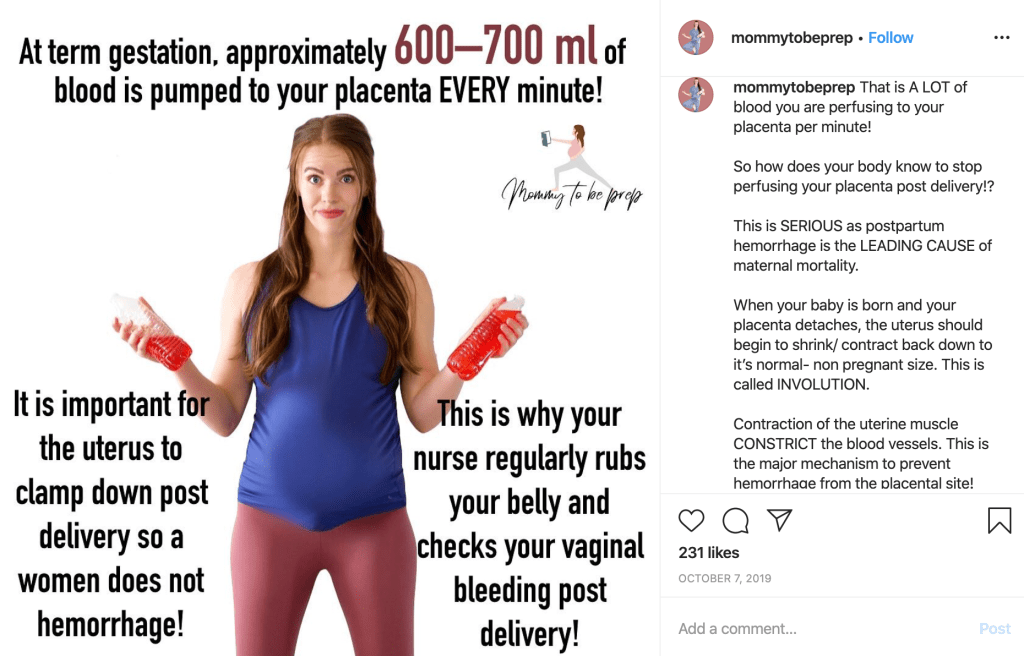
While these qualifications seem to make the information she is providing seem very credible, remember to take what you read online with a grain of salt, and to consult your doctor about any questions or concerns you may have or major changes that you are looking to make. This is a good first step but looking deeper to websites listed above like the CDC or Stanford to confirm these facts is crucial.
Overall, the information online about PPH is fairly simple to analyze. If you are reading about someone’s personal experience, keep in mind that that is their experience. Federal agencies like the CDC are always a great place to start when looking to do research into any health behavior or issue. University sources are also great resources for accurate information that you need not question.
As you read through blogs, posts on social media sites like Instagram or Pinterest with their graphics, remember to fact check and don’t believe it just because it looks pretty or sounds correct. And remember, when in doubt, your doctor is your friend!
 PPH: Postpartum Hemorrhage or Postpartum Happiness?